.jpg)


Dinosaurs by the Sea
The Isle of Wight is Britain’s fossil frontier; an internationally important site for palaeontological discoveries both past and present. Hanna Prince dives in to discover more...
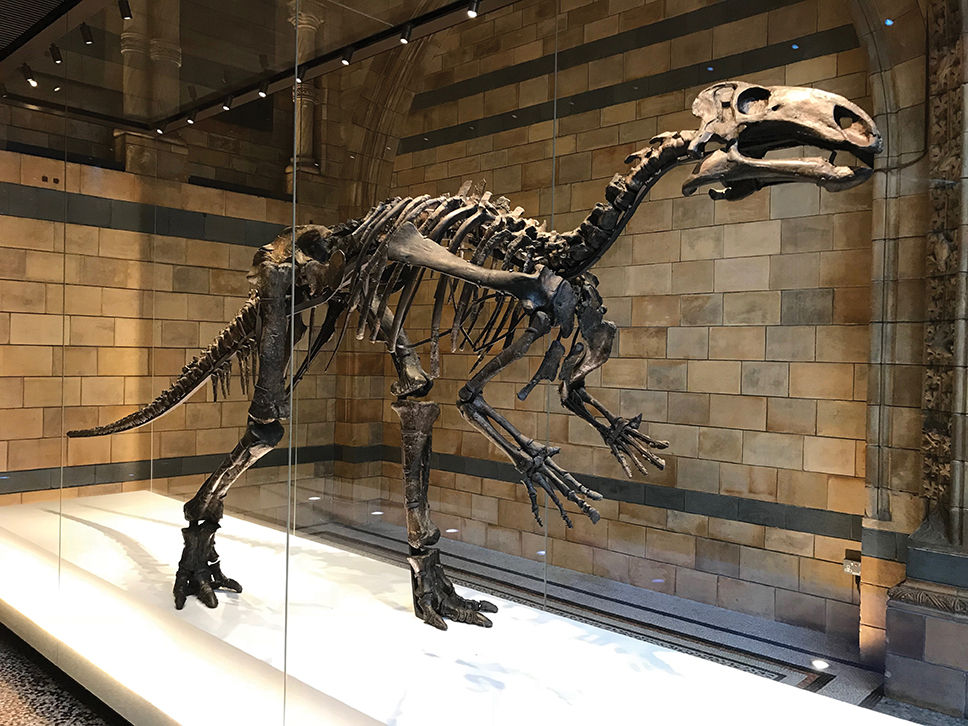
If you could travel 125 million years back in time and take a stroll around Cretaceous-era Isle of Wight, you might notice a few differences. For a start, the underlying geology that today makes up the Island was located much further south; around the same latitude as present-day North Africa. It was part of a vast, flat floodplain, where meandering rivers crossed a landscape pockmarked with ponds, oxbows and lakes. The climate back then was mostly dry and warm, but every now and then the area was racked by violent rainstorms. When that happened, water swept across the plain in sheet floods. It picked up rocks, tree trunks, vegetation and animal remains, depositing them in layers that hardened over time into sedimentary rock.
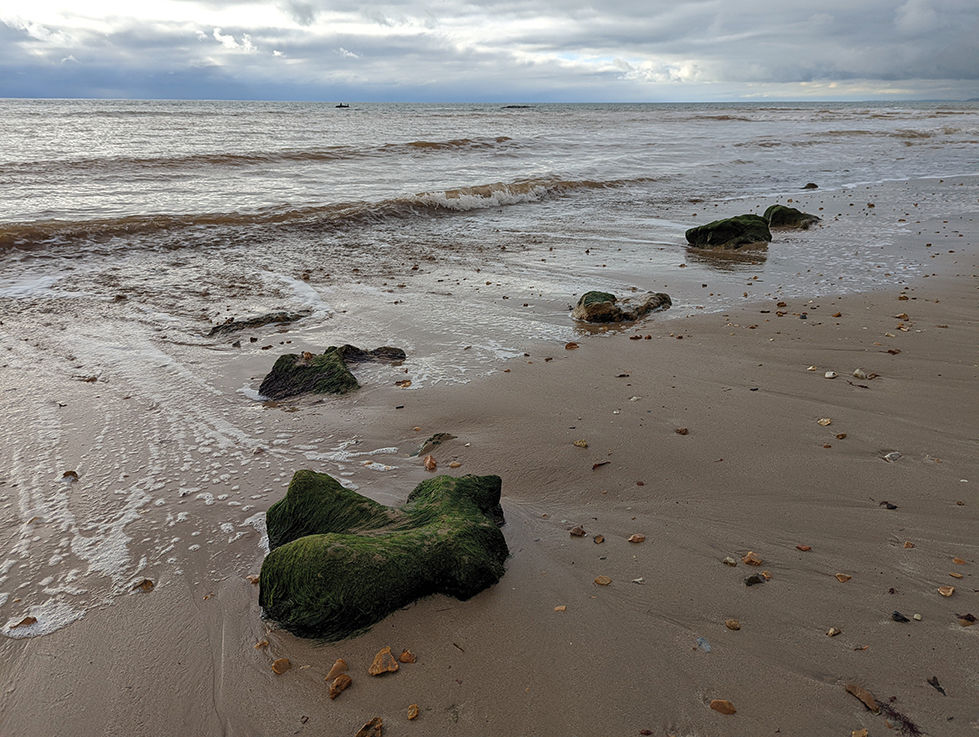
Today, geologists call that rock the Wessex Formation. It breaks the Island’s surface in two main belts: a larger outcrop that runs along the south-west coast through Compton Bay and Brighstone Bay towards Atherfield, and a smaller one on the south-east coast around Sandown. It’s the secrets hidden in these petrified Cretaceous flood sediments that have made the Island a hotspot for dinosaur hunters.
Terrible lizards
“The geology of the Island is but little known or regarded by the majority of the intelligent persons,” wrote renowned Victorian palaeontologist, Gideon Mantell, “who every season flock by thousands to its shores... without ever suspecting that they have been travelling over a country rich with the spoils of nature and teeming with objects of the highest interest to the instructed observer.”
The objects he talks about are, of course, dinosaur fossils. When those floods swept in across the Cretaceous plains, they sometimes preserved the bodies of the creatures they wiped out. Among them were large, lumbering Iguanodontians, huge numbers of speedy Hypsilophodon, the 25-foot-long meat eater Neovenator and plate-covered, tank-like Polacanthus.
Before the term ‘dinosaur’ had even been coined, Island locals were already making fascinating discoveries. In 1818, vast bones were uncovered in the cliffs of Mottistone. They were thought to be the remains of woolly mammoths; but then workers excavating on Yaverland beach in 1829 found what were clearly the bones of several different 'very large animals'. It was around the same time that local merchant James Vine began collecting fossilised bones from the Island’s south-west coast. One of these – an Iguanodon sacrum - found its way to a private London museum, where it was seen by Victorian scientist Richard Owen.
At the time, Owen was trying to understand the relationships between the enormous extinct reptiles being discovered in Britain. The Isle of Wight sacrum convinced him that the likes of Iguanodon, Megalosaurus and Hylaeosaurus belonged together in a previously unrecognised group, which he decided to call ‘Dinosauria’ after the Ancient Greek for ‘terrible lizard’. “The characters of the order Dinosauria,” he said of the Island sacrum, “were mainly founded on this specimen.” In other words, a discovery made on the Isle of Wight helped eventually coin the term ‘dinosaur’.
Bones and tracks
The mid 19th century was a golden age for fossil hunting on the Island. One of the period’s most famous palaeontological names was Reverend William Fox, who was a curate at St Mary’s Church in Brighstone village. He spent hour after hour scouring the cliffs surrounding his parish for specimens – in fact the vicar’s wife famously said of him that it was, “Always bones first and the parish next.” In a letter to Richard Owen, Fox expressed a deep passion for his hobby: “I cannot leave this place while I have any money left to live on,” he wrote,” I take such deep pleasure in hunting for old dragons.”
Despite not being a professional scientist, Fox arguably discovered more dinosaur species than anyone else in the UK. He still holds the record for the Englishman who has had most dinosaurs named after him. After his death in 1881, Fox’s huge collection of over 500 major specimens was acquired by the Natural History Museum – and you can still see some of them on display today.
Of all Fox’s many discoveries, the most spectacular was arguably the armoured Polacanthus. An article in the 1865 edition of the Illustrated London News describes this finding under the headline: A New Wealden Dragon. “A very remarkable reptile, to which Professor Owen has given the name of Polacanthus, has lately been discovered by the Rev. W. Fox, of Brixton, Isle of Wight, in the Wealden beds, which form the sea-cliff in that part of the island,” it says. “The most remarkable character in the creature was this – its back was covered with an immense shield of bone, like the carapace of a turtle, about 1.2 in. thick, and taking away all elasticity from the spinal column.”
There were people other than Fox, of course, delving into the Island’s palaeontological delights. Scientists Gideon Mantell, Samuel Beckles and James Bowerbank spent time here searching for fossils. Locals, too, such as Stephen King and Charles Wheeler, both uncovered finds of their own and guided distinguished scientific visitors to the most prolific spots. Excitingly, these Victorian pioneers were discovering tracks as well as bones. As early as 1851, geologist Samuel Husbands Beckles described encountering large, three-toed imprints embedded in the Wealden rocks between Brook and Brighstone. The Island was cementing its reputation as an internationally important site for dinosaur discoveries.
From then to now
The revelations didn't end with the Victorians. In 1914, Reginald Hooley made an extraordinary discovery near Atherfield: the remains of a Mantellisaurus atherfieldensis, now thought to be one of the most complete dinosaur skeletons ever found in Britain. “This very fine fossil was obtained from the débris of Wealden Shales, after a fall of the cliff near Atherfield,” Hooley wrote in a 1925 paper. “The complete skeleton was probably present when in situ, and the missing portions were carried away by the heavy seas, which scoured the foot of the talus for several days, preventing all search for the bones except at low tide.”
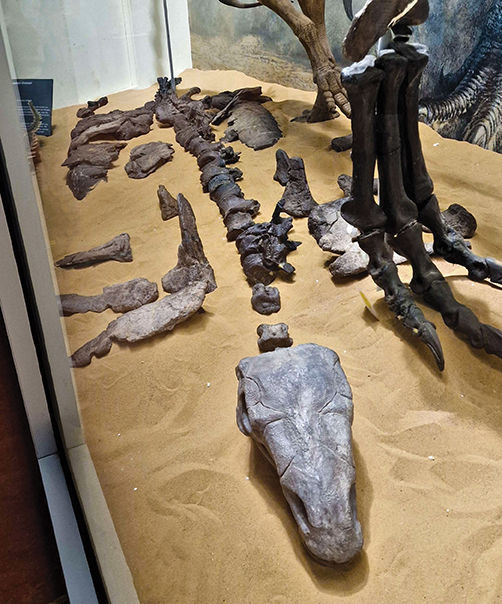
Another spectacular development came in the late 1970s, when the bones of a new predator – Neovenator – were found near Brighstone by the Henwood family. And even more recently, in 2013, fossil hunter Nick Chase uncovered 149 bones at Compton Bay. This was later found to be a completely new species, Comptonatus chasei: the most complete large dinosaur to be found in Britain for a century.
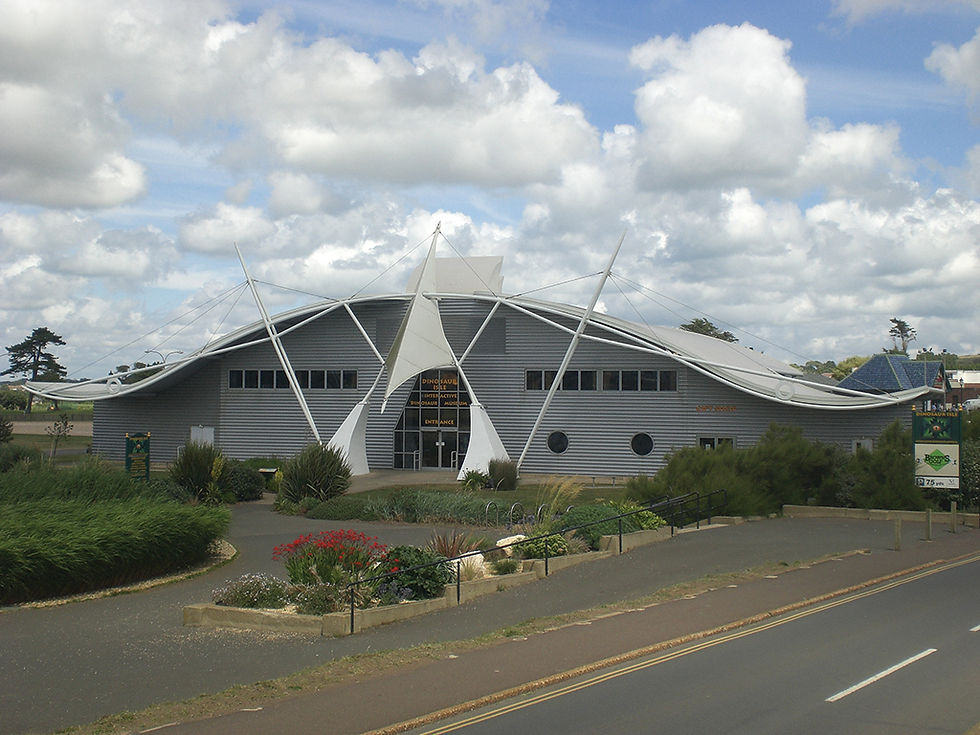
Today, Compton Bay and Brighstone remain exceptional fossil-hunting territory. At low tide you can walk across the same flood plain once roamed by dinosaurs, looking out for fossilised remnants of bones, teeth and Cretaceous wood. Hanover Point is a world-class location for footprint spotting, with over 300 dinosaur foot casts recorded in the area. At Dinosaur Isle Museum you can view some of the major Island discoveries, including that amazing Comptonatus chasei specimen. And if you’re taking a stroll around the south-west or south-east coasts, it’s always worth keeping your eyes peeled for something unusual among the rocks and shingle. Who knows what you might find?
For more information about Dinosaur Isle Museum visit: www.dinosaurisle.com


Comments